
How to Find the Best Raincoat for Your Dog
Nobody likes being cold and wet. A dog that likes jumping in rivers may not like the idea of walking along a rainy, gray sidewalk.
That’s why dog raincoats have become a popular way to keep pups warm and dry while warding off the worst of that dreaded “wet-dog smell.”
So, what actually makes a dog raincoat worth buying, and how do you choose one that your pup will be happy wearing?
Key Takeaway
-
The best dog raincoat is waterproof, breathable, lightweight, and comfortable, with a secure fit that allows your dog to move freely. Reflective details can also improve visibility on rainy walks.
-
Sparkpaws raincoats are designed with practical wet-weather features, including adjustable coverage, breathable materials, reflective strips, and a side-buckle design that makes them easy to put on and take off.
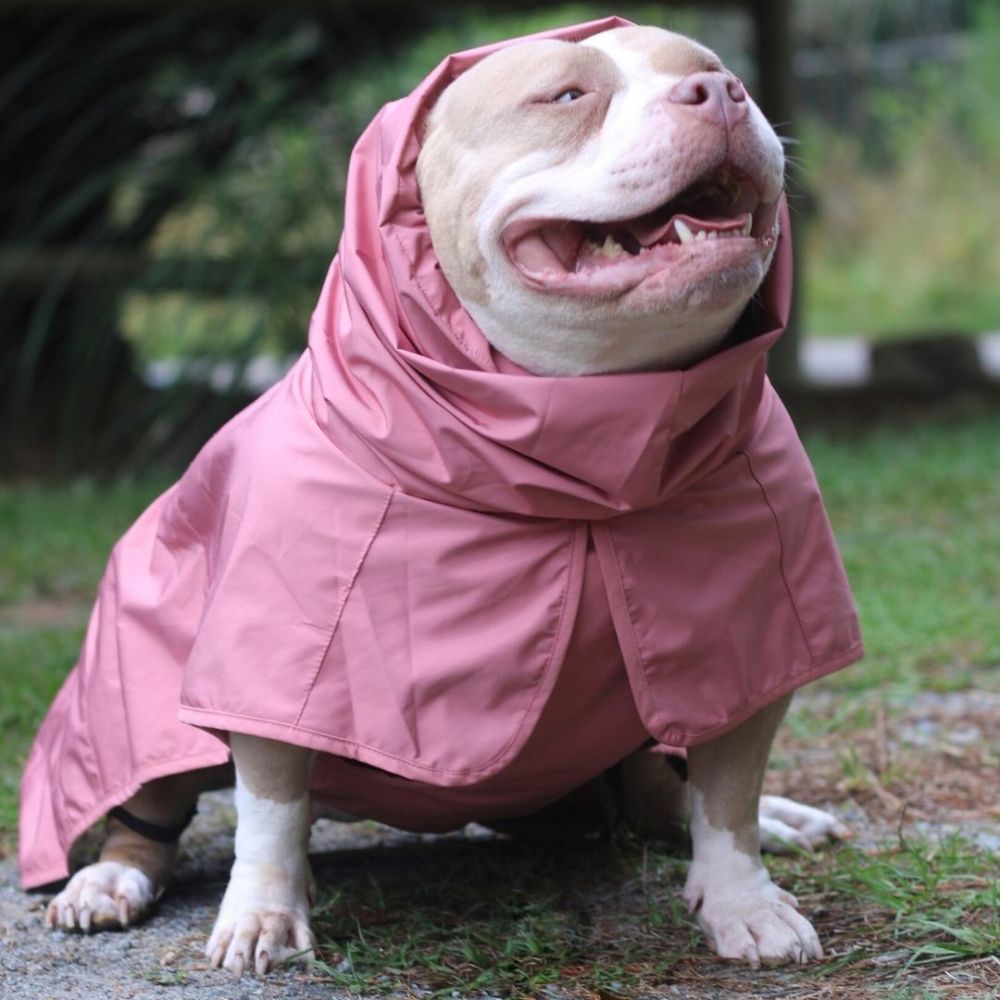
Does My Dog Really Need a Dog Raincoat?
Good question.
Most dogs don’t mind getting a bit damp, but if you are planning a long walk or if there is a chance of your dog getting soaked without much chance of drying off (like on a hike or camping trip) then a dog raincoat is a good idea.
A rain jacket can help keep your dog warm and dry, which can help them stay comfortable and put less strain on their immune systems.
However, some dogs do better in wet weather than others. You should consider investing in a dog raincoat if your dog is very young, old, pregnant, sickly, or suffers from chronic allergies or infections. These dogs are the most vulnerable to the effects of rainy days.
Certain breeds may also have a harder time in cold weather. Small breeds with little mass-to-weight ratio, such as chihuahuas and Pomeranians, are more likely to suffer from the cold.
Very fluffy breeds may have a difficult time drying off, putting them at risk for disease, and short-coated dogs will feel the cold and the wet quite quickly. Short-legged breeds are also more likely to get soaked.
Certain breeds also handle cold, wet conditions better than others, so it’s worth checking how well your dog’s breed copes with the rain.
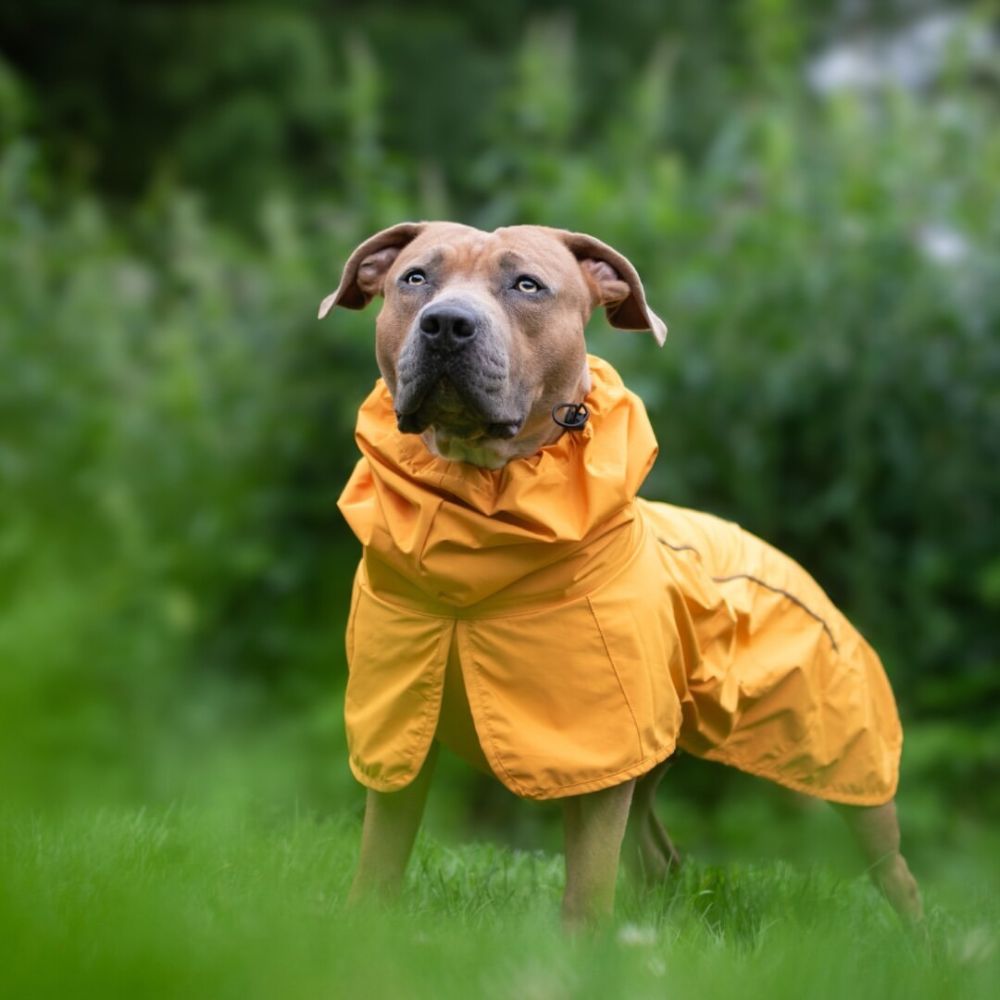
Qualities of a Good Dog Raincoat
Material
A dog raincoat that lets in, or worse, soaks up water, is about as useful as an umbrella with holes in it. There’s a reason you can’t just throw on a doggy sweater and head out into the rain.
Naturally, dog raincoats should be waterproof, or at least as water-resistant as possible. However, thick rubbers or plastics can also be stiff, making it difficult to walk on or be very stifling for a dog.
This means that the best dog raincoats should have a lightweight, waterproof outer layer made from materials such as nylon or polyester. The fabric should also allow enough airflow to keep your dog comfortable without restricting movement.
A raincoat might also have a soft, comfortable inner layer for cold protection, such as a layer of sheep wool or fleece - but this isn’t strictly necessary, since you could just put a vest or coat underneath if the weather permits.
Some materials, like rubber, can also get quite heavy, especially for smaller breeds. There is no point in buying a thick and heavy raincoat that your dog is just going to become exhausted in.
Pick the Best Raincoat for the Weather
The best raincoat also depends on when and where your dog will wear it. A lightweight, unlined coat is usually enough for warm, wet weather, while cold rain may call for a roomier raincoat that can fit over a sweater or insulated jacket.
Windy conditions make a snug fit and good neck and chest coverage more important, while frequent heavy rain calls for high visibility, reflective piping or reflective logos, and stronger waterproofing. Choose the most thoughtful design for your local weather rather than assuming that the thickest coat will always offer the best protection.
The Fit
A good dog rain jacket should have a tailored fit. This means making sure it fits snuggly around the dog’s body without being too tight.
Since most waterproof materials are non-stretchy, it's a good idea to find a raincoat in the right size, preferably one with adjustable straps so that it can be as tight or as loose as you need. This is important if it doesn’t come with an inner layer so that you can layer a sweater underneath if it's a cold day.
A quality that’s unique to raincoats is that they should cover as much of the dog as possible. This means that it is a good idea to find one that covers the dog’s chest -covering your dog’s underside will prevent puddles, splashback, and mud from getting on the dog's chest and stomach. Many raincoats have elastic leg loops and other adjustment points to secure them.
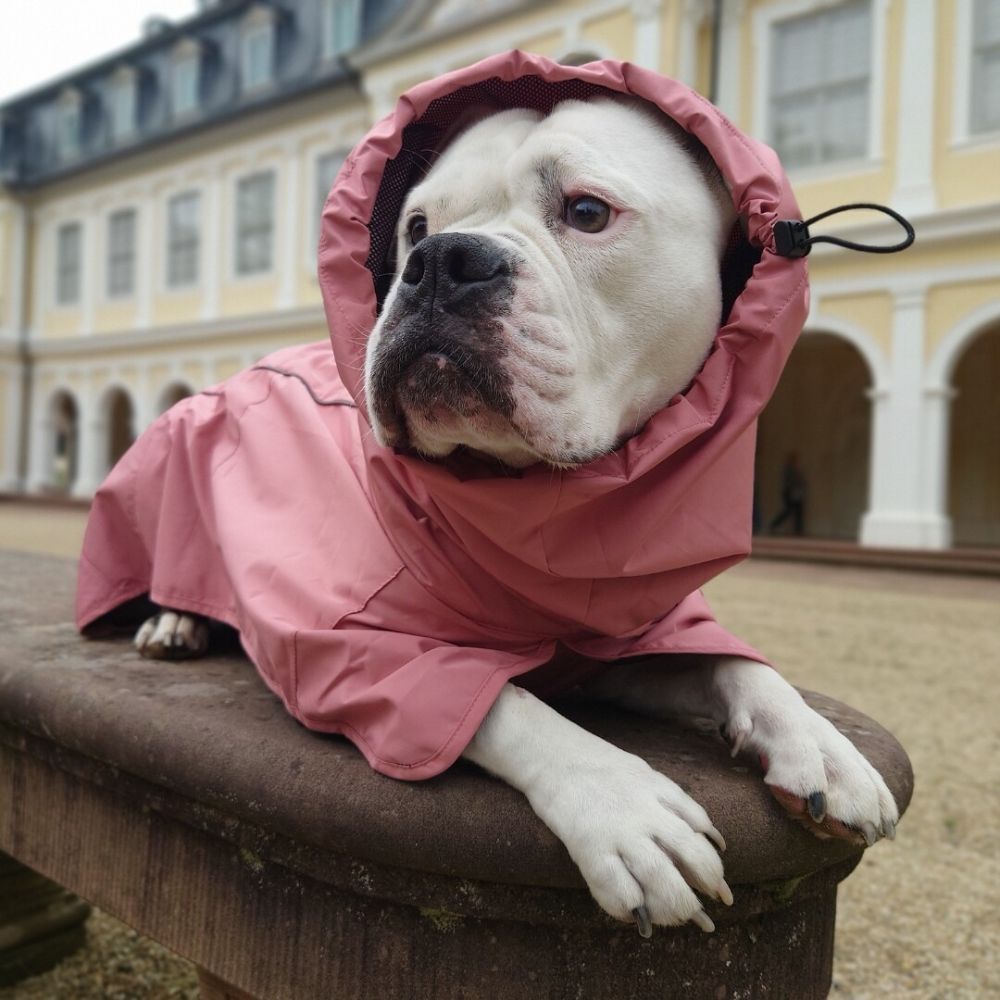
The dog's neck, and preferably its head as well, should also be covered so that water doesn't run down into the coat. A dog's ears can be quite sensitive to cold and wetness.
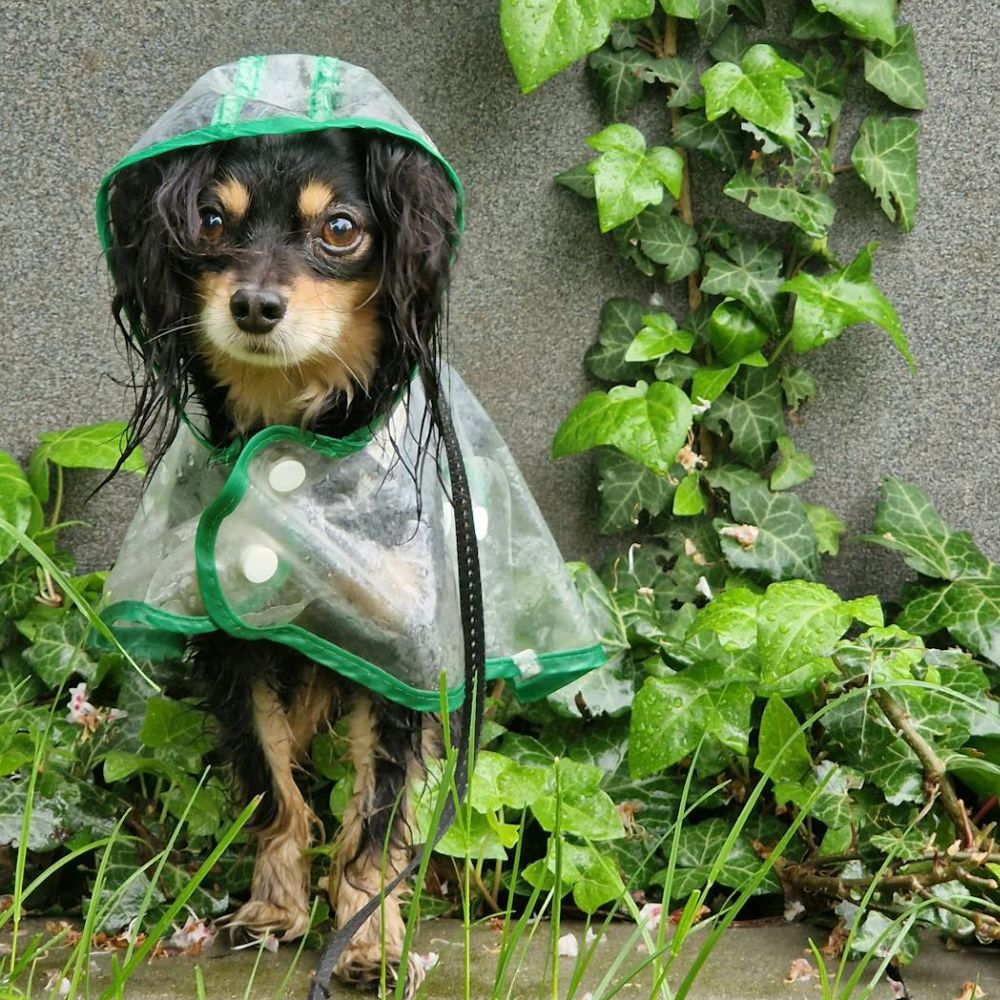
No dog coat or raincoat should ever restrict movement, chafe the dog's fur, or prevent them from being able to use the bathroom easily. Since belly coverage is important, choosing the right size rain jacket is important.
It's a good idea to go slightly larger so that you can still include a harness or a jacket for walking. You would also want to find one that has a protected leash hole. The leash hole should allow the leash to connect without letting in too much water.
How to Measure Your Dog for a Rain Jacket
While some rain jackets offer sizes based on dog breed, this isn’t always accurate.
You should use a soft tape measure to get the chest girth at the widest part of the rib cage, the back length from the base of the neck to the base of the tail, and the neck circumference where the raincoat will sit, where the dog’s collar would normally be.
If your dog is between sizes, then it is better to go for the larger size. Remember that the raincoat is a waterproof exterior, not an insulated dog jacket, so leave room for winter coats or sweaters underneath the raincoat if going out in the cold.
Comfort
A dog rain jacket should keep your dog dry without making them too hot or uncomfortable. Heavy, non-breathable materials can trap heat, especially in warm or humid weather. [2]
Dogs regulate temperature partly through their coat, so a rain jacket should allow enough airflow and freedom of movement. Choose a lightweight, breathable design and watch for signs that your dog is getting too warm. [3]
A hood can help keep your dog’s head dry, but it should never block their vision or restrict movement. If your dog seems uncomfortable wearing one, a hoodless or adjustable design may be a better option.
A Leash Portal
One of the most important coat features on a raincoat is the leash portal, which allows you to safely attach a leash to your four-legged friend without compromising the coverage area of the raincoat.
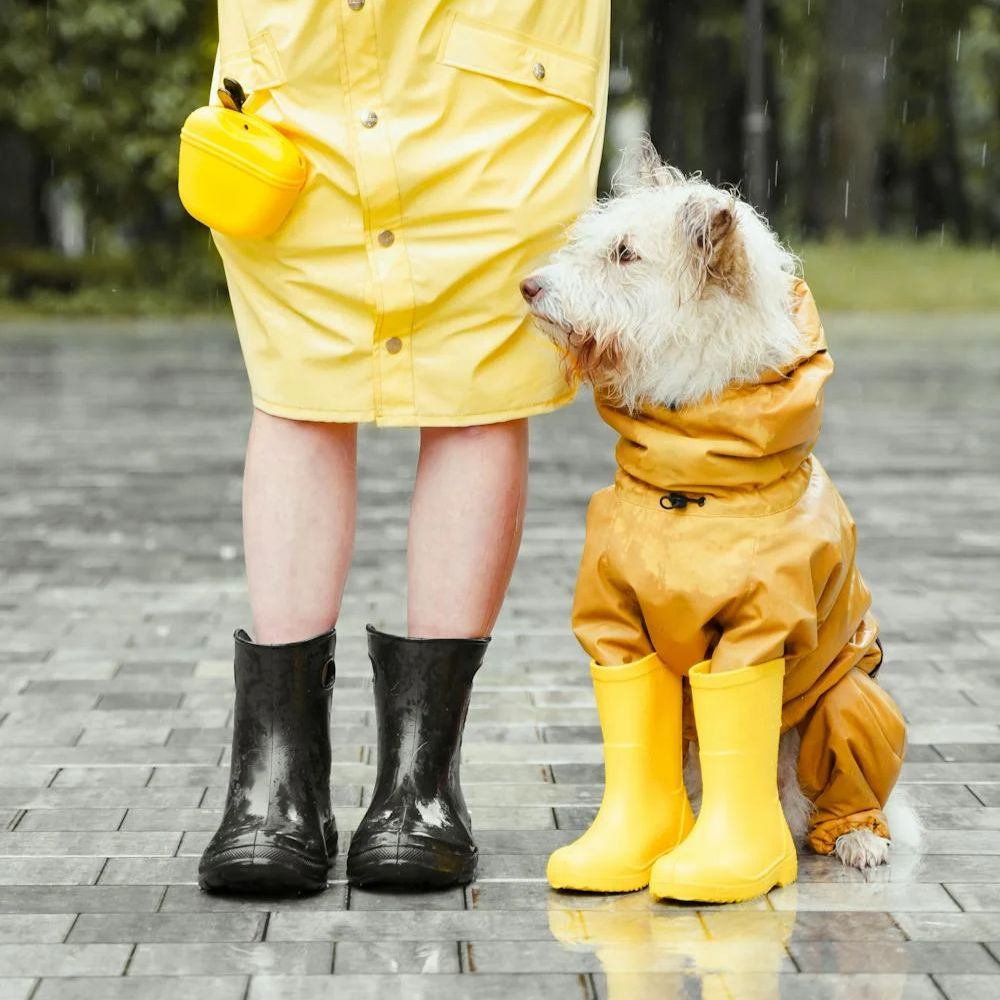
Easy to Get on and Off
The key to a good raincoat is balance. You want a coat that’s going to keep your pup dry, protecting as much of their bodies, heads, and legs as possible. However, an all-encompassing raincoat will be quite uncomfortable.
If a raincoat is too difficult to get off, then you’re likely just going to dump all of the collected water on your dog and the floor and create a mess anyway. For instance, Sparkpaws raincoats have easy side-clipping for quick removal.
It is better to aim for a coat that offers some customizability with straps and clips rather than one that has to be pulled over. A ‘tent’ design, where the raincoat flares a bit, allowing the water to pour off may also be more comfortable and drier than one that wraps tightly around all of the limbs.
Rubber and canvas coats that don’t come with an inner lining could catch and pinch on fur, or rub against a harness worn underneath. This is uncomfortable for the dog, generates static, and could even cause skin and coat problems…especially if any water has gotten inside the coat. Always look for a dog rain jacket with a soft or non-stick inner lining.
Style and Color
Color goes beyond the aesthetic when choosing a dog rain jacket. Many dogs go missing in stormy and rainy weather, and visibility is low on busy roads - especially for a dog that stands below the eyeline.
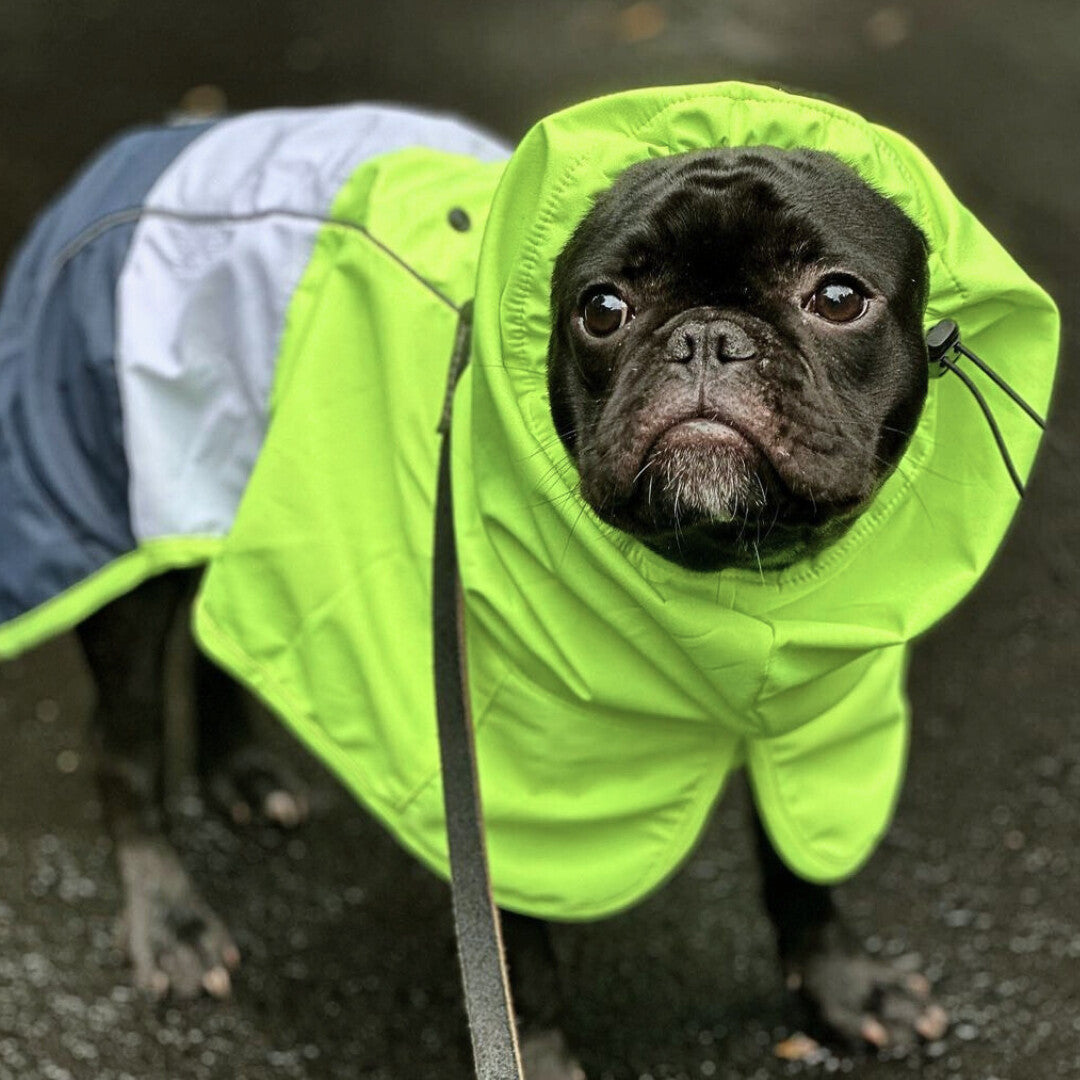
It is because of this that choosing a raincoat that is bright or reflective is very important. Many dog raincoats will come with a strip of reflective material or a reflective trim of some kind.
It is wise to avoid raincoats that are very pale or see-through as a dog covered in pale pastels or raindrops might suddenly become ‘invisible’ when running on a gray and rainy day. If you live in a forested area then you may also choose to avoid greens and browns.
Your average waterproof raincoat should normally come in bright colors and shiny, reflective material, but always take the time to make sure that it has these functions before you buy. This could be a matter of life and death!
Aftercare and Maintenance For Raincoats and Dogs
No raincoat is a hundred percent guaranteed to keep your entire dog dry. Take the time when you get home to towel them off and ring out any sopping wet fur. This will minimize any risk of them getting sick or cold.
The raincoat should come with cleaning instructions. Normally it's a good idea to wipe them off to remove excess water and mud so they can be easily stored. While some coats may be machine washable, the waterproof coat is likely to be damaged, removed, or cracked by high temperatures and tumbling.
At Sparkpaws we recommend wiping the raincoats down and only washing them if they’ve become noticeably dirty or smelly.
If you must wash, try using an odorless detergent for the sake of your dog. It is recommended to handwash the raincoats to prevent any damage, as well as leave the rain jacket to air dry.
How Does Sparkpaws Measure Up?
How do Sparkpaws raincoats compare to the qualities talked about?
Material - Our raincoats are made from waterproof, windproof, lightweight, durable materials that allow for better temperature regulation by allowing excess heat and moisture to escape. All raincoats come with a non-stick mesh lining.
Fit - Our raincoats have an adjustable neck wrap, designed to keep your dog’s neck and face dry without interrupting vision and have an adjustable design to allow the dog to still use the bathroom freely.
Comfort - All raincoats are breathable, and allow enough room for harnesses and warm coats to be worn underneath.
Easy to get on and off - They are easy to put on and take off with a side buckle design that allows you to have control without creating a wet mess.
Style and color - There are a range of colors available, from the classic to the more outlandish, but they all have reflective strips on the side of the raincoat for safety.
Consider checking out our Breatheshield Dog Raincoat Collection and checking out the reviews and offers we have at the moment.
Conclusion
A great raincoat is one that keeps your pup dry in wet conditions without getting in the way of a comfortable walk. Consider your local weather, measure your dog carefully, and look for a lightweight, breathable design with enough coverage and room to move.
Explore the Spark Paws dog raincoat collection to find a comfortable, adjustable option for your next rainy-day walk.
Happy Walking!
FAQ
Does a Dog Raincoat Need a Hood?
No, a hood on a dog raincoat is optional. Not all dogs like having their ears covered and may dislike the hood. However, a hood offers full body coverage and can help keep your dog drier. A hood can also offer more warmth in cold temperatures.
Should a Dog Harness Go Over or Under a Raincoat?
A harness can sit under the raincoat when the coat has a properly positioned leash opening that gives you easy access to the harness attachment point. When there is no harness hole, the harness usually needs to go over the coat. Make sure the raincoat does not bunch up under the harness or alter its fit, and check that the straps do not rub against your dog’s skin while walking.
What is the Difference Between Waterproof and Water-resistant Dog Raincoats?
A water-resistant raincoat can repel light rain for a limited time but may eventually let water through during a long walk or a heavy downpour. A waterproof raincoat offers stronger protection and may include sealed or taped seams to prevent water from entering through the stitching. Waterproof construction is the better choice for frequent rain, hiking, or extended outdoor use.
Can a Dog Overheat in a Raincoat?
Yes. A raincoat can trap heat, particularly in warm or humid weather, during strenuous exercise, or when worn by a thick-coated dog. Choose a lightweight, breathable design and watch for excessive panting, slowing down, drooling, or attempts to remove the coat. Take it off and move your dog to a cooler area when they appear uncomfortable.
Ext Links
[1] https://www.animalfriends.co.uk